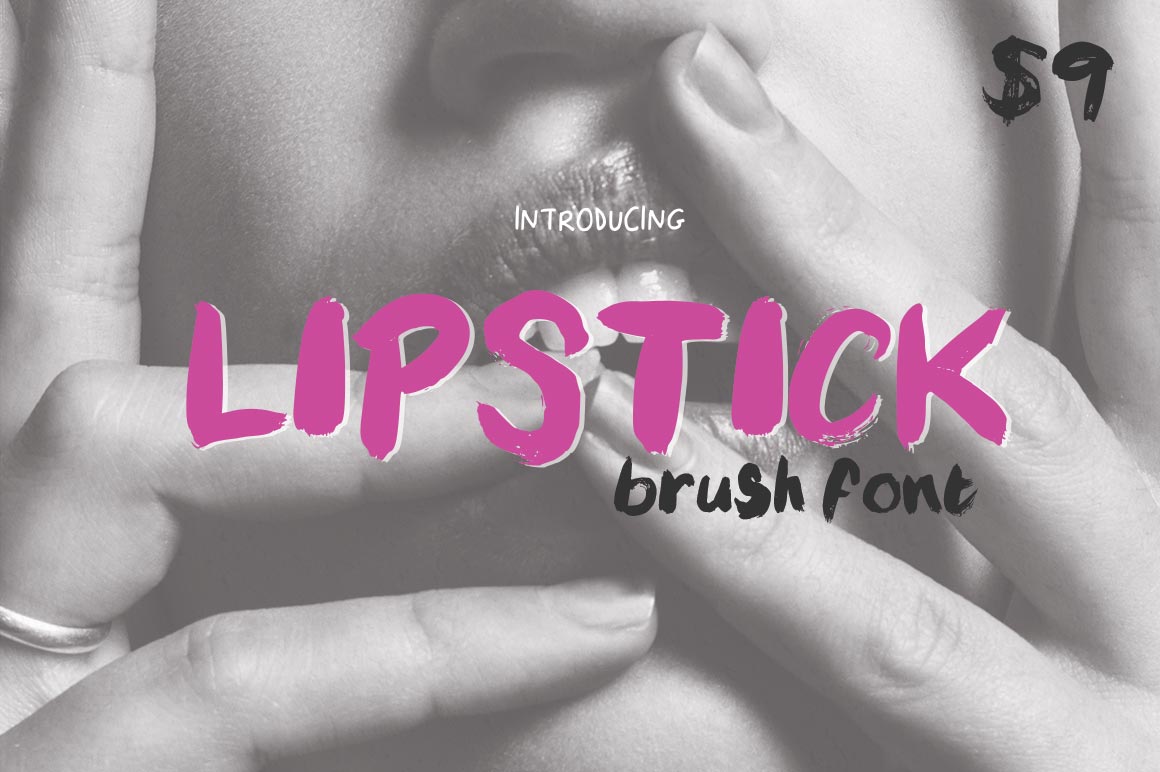
Lipstick Brush: A Bold and Textured Font for Edgy Designs
Lipstick Brush is a unique font that stands out due to its hand-painted aesthetic, created using acrylics and then scanned and vectorized. This process gives the typeface a dynamic, organic feel that can add personality and visual interest to a wide range of design projects. Unlike many digital fonts that aim for uniformity, Lipstick Brush embraces imperfections, making it ideal for creative work that benefits from a more human touch.
The font’s texture and irregularities are not just stylistic choices—they reflect a deliberate design philosophy. By incorporating the natural variations found in hand-painted letters, Lipstick Brush offers a level of authenticity that is difficult to replicate with purely digital tools. This makes it particularly appealing for designers looking to convey a sense of craftsmanship or artistic expression in their work.
What Makes Lipstick Brush Distinct?
Lipstick Brush differs from traditional serif and sans-serif fonts by combining the fluidity of brush strokes with the precision of vector graphics. The result is a typeface that feels both spontaneous and controlled. Each letterform has a slightly different weight and shape, mimicking the way an artist might apply paint with a brush. This variation adds depth and movement to text, making it stand out in a sea of static typography.
Unlike many fonts that prioritize clarity and readability, Lipstick Brush prioritizes character and style. While this may make it less suitable for body text, it excels in headlines, logos, and other visual elements where impact is more important than legibility. Its bold strokes and uneven edges create a striking presence that can draw attention and evoke emotion.
How Does Lipstick Brush Compare to Similar Fonts?
When compared to other hand-drawn or brush-style fonts, Lipstick Brush has a distinct edge. Many similar fonts aim for a more polished look, smoothing out the irregularities that come with manual painting. Lipstick Brush, on the other hand, retains these imperfections, giving it a raw, unfiltered quality that sets it apart. This makes it a better choice for projects that benefit from a more authentic, artisanal feel.
In contrast to digital brush fonts that often rely on pre-set styles, Lipstick Brush offers a more unpredictable and expressive result. Designers who want to avoid the artificial look of generated brush effects may find Lipstick Brush to be a more compelling option. However, it’s worth noting that this unpredictability can also be a limitation, as it may require more careful placement and spacing to achieve the desired effect.
Strengths and Tradeoffs of Lipstick Brush
One of the main strengths of Lipstick Brush is its ability to add a sense of energy and movement to design work. Its textured strokes can create a visual rhythm that enhances the overall composition. This makes it especially effective for branding, packaging, and promotional materials where a strong visual identity is key.
Another advantage is its versatility across different mediums. Whether used in print or digital formats, Lipstick Brush maintains its distinctive character. It works well in large-scale applications such as posters and banners, where its boldness can make a statement. However, it may not be the best choice for small text or detailed layouts, where the irregularities could become distracting.
On the downside, the font’s irregularities may require additional effort to fine-tune. Designers may need to adjust kerning and spacing manually to ensure consistency, which can be time-consuming. Additionally, because of its unique style, Lipstick Brush may not be suitable for all types of projects—particularly those that require a more neutral or professional appearance.
When Lipstick Brush Is the Right Choice
Lipstick Brush is ideal for projects that seek to convey a sense of creativity, individuality, or artistic flair. It works well for brands targeting younger, trend-conscious audiences or for campaigns that emphasize handmade or artisanal qualities. For example, a boutique clothing line might use Lipstick Brush in its logo to communicate a sense of uniqueness and craftsmanship.
It is also a good fit for editorial designs, such as magazine covers or book titles, where a strong visual impact is needed. In these contexts, the font’s texture and movement can enhance the overall aesthetic and make the text more engaging. Additionally, Lipstick Brush can be used effectively in social media graphics, where eye-catching visuals are essential for capturing attention.
When Other Options May Be Better
While Lipstick Brush has its advantages, there are situations where other fonts may be more appropriate. For instance, if clarity and consistency are paramount, a more structured font might be a better choice. This is especially true for projects involving long blocks of text, where readability is crucial.
Designers working on corporate or formal projects may also find that Lipstick Brush feels too informal or unconventional. In such cases, a clean, minimalist font would be more suitable. Similarly, for digital interfaces or user experiences, where uniformity and predictability are important, Lipstick Brush may not provide the best results.
Practical Applications and Examples
Consider a scenario where a designer is creating a poster for a music festival. Using Lipstick Brush for the headline could add a vibrant, energetic feel that matches the event’s vibe. The font’s texture would complement the colorful visuals and help create a cohesive, eye-catching design.
On the other hand, if a company is designing a brochure for a financial service, they might opt for a more traditional font that conveys trust and professionalism. In this case, Lipstick Brush would likely feel out of place, as its informal style could undermine the intended message.
Deciding Whether Lipstick Brush Fits Your Needs
When evaluating whether Lipstick Brush is the right choice, consider the project’s goals and audience. If the design aims to express creativity, emotion, or a unique identity, Lipstick Brush can be a powerful tool. However, if the focus is on clarity, consistency, or formality, alternative fonts may be more appropriate.
It’s also helpful to experiment with the font in different contexts. Testing it in various sizes, colors, and layouts can reveal how it performs in real-world scenarios. This process can help determine whether its strengths align with the project’s requirements and whether any tradeoffs are acceptable.
Ultimately, the decision to use Lipstick Brush depends on the specific needs of the design. By understanding its characteristics and limitations, designers can make informed choices that enhance their work while avoiding potential pitfalls.